NSE ●BSE ●
Wheat farming requires farmers to oversee their crops from the beginning of the growing season until the end. Phalaris minor, which farmers call "Gulli Danda" or canary grass, presents one of the most difficult challenges that farmers must deal with. The weed establishes strong competition with wheat crops because it needs the same resources, which results in substantial crop losses when farmers fail to control its spread.
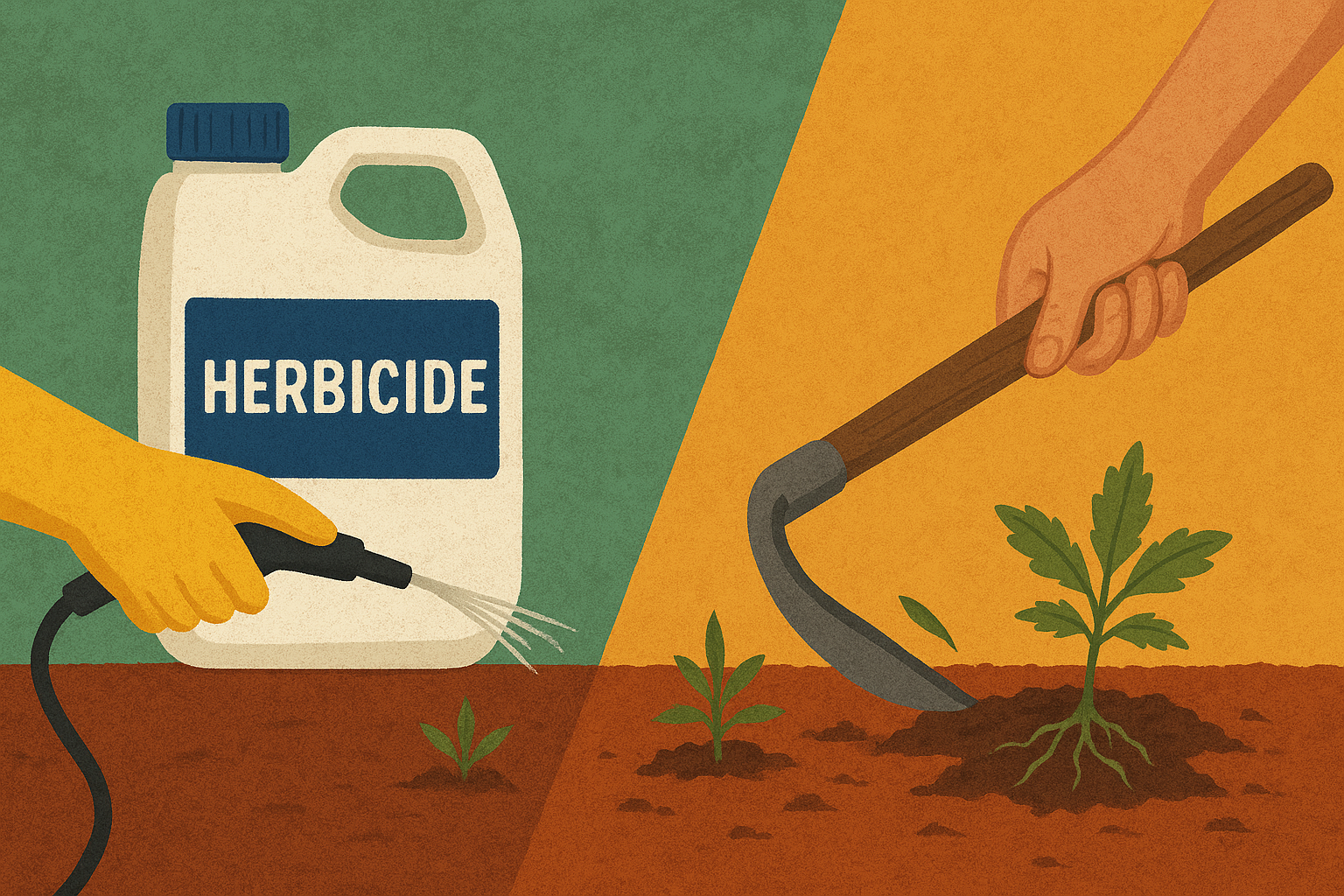
Farmers depend on post-emergent sprays because they use them after they see the first signs of weeds. Successful wheat weed management requires wheat farmers to prevent weeds before they turn into dangerous problems. The process of weed control needs farmers to know about pre-emergent and post-emergent methods.
This guide explains how early-season pre-emergent interventions can help farmers achieve season-long control of Phalaris and improve wheat productivity.
Phalaris minor is one of the most harmful grassy weeds in wheat-growing regions of India. Many farmers find it difficult to identify this weed because it grows similarly to wheat during its first growth stages. The plant establishes itself rapidly after it establishes roots, which enables it to extract most available soil nutrients and soil moisture.
Timely weed management becomes a crucial necessity for farmers because they need to protect their wheat crops from losses, which can reach 25 to 50 percent during severe weed infestations.
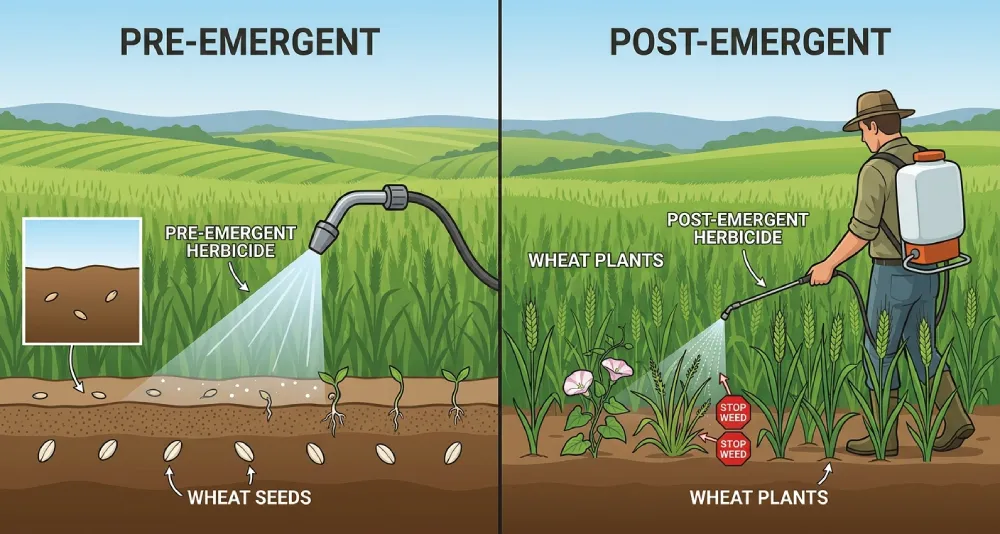
Pre-emergent weed control is the process of using herbicides before the weed seeds start to sprout or emerge from the soil. The herbicides form a barrier in the top layer of the soil that stops weed seedlings from growing properly.
In the case of wheat, pre-emergent herbicide application is generally carried out within the first 0-3 days after planting. The objective is to eliminate weeds such as Phalaris that can compete with the crop.
Incorporating a herbicide weed killer with the plan at the initial phase can allow the wheat crop good compensation for efficient and healthy growth.
Post-emergent weed control is the use of herbicides on weeds that have already sprouted from the soil. Such herbicides are aimed at weeds that are still alive and actively growing and these are generally sprayed at the time when crops are also growing.
Farmers usually resort to post-emergent herbicides once they see the weeds in the field. Although this approach might work, it is the most effective only when the weeds are still small and manageable.
Nevertheless, solely relying on post-emergent control might still be a risk, especially in the areas that are heavily infested with Phalaris.
A lot of farmers tend to wait until the weeds are clearly visible before they take any measures. By then, the weeds have already been competing with the crop. Competition during the first 30, 40 days of the wheat growth period can have a major impact on tillering and development of the crop.
Pre-emergent weed management is like the first line of protection. It lowers the starting number of weeds and sets the stage for wheat to grow in a relatively weed-free environment.
1. Completely Eliminates Phalaris Pre-emergent herbicides work by stopping weed seeds from sprouting at the root level. This approach significantly lowers the chances of heavy Phalaris growth later on.
2. Lessens Wheat Crop Stress Without early competition for nutrients and water, young wheat plants have a better chance to develop healthily and reach their full growth potential.
3. Maximizes Post-Emergent Herbicide Results Effective pre-emergent use keeps the weed levels rock-bottom, which makes post-emergent herbicides even more potent in case you need extra control.
4. Slows Development of Herbicide Resistance Repeated use of the same post-emergent product is one of the main causes of herbicide resistance in Phalaris. Combining pre-emergent herbicides can help in diluting this pressure.
For wheat farmers, the best option is not to pick one control method and discard the other; rather, it is to rely on both in a smart way.
Herbicide application should be done as close as possible to the time of wheat sowing. For herbicide activation, soil moisture plays a crucial role.
Even with the use of pre-emergent, it's a good idea to inspect your fields from time to time to spot any remaining Phalaris plants.
Missed weeds in the first treatment can be effectively targeted with a post-emergent herbicide, which keeps your field free of weeds all season.
This integrated approach of using a combination of methods results in superior and prolonged weed control over one method alone.
Weed management product selection requires assessment of five key factors, which include:
Farmers should always choose quality herbicide products from trusted agricultural brands to ensure effective and safe weed control.
Indian farmers search for the best weed killer in India because they need to control tough weeds like Phalaris. The right solution, combined with proper timing and field practices, can make a major difference in overall wheat productivity.
Wheat producers need to start their weed management processes before weeds become visible because this method supports their farming operations throughout the entire growing season. The process requires development of a comprehensive growing season plan, which begins with early season preparations. Pre-emergent weed control functions as a critical defence to prevent Phalaris minor from becoming a widespread issue, while post-emergent applications deliver extra protection when it becomes necessary.
Farmers who use early-season interventions will achieve better field conditions, which lead to healthier crops and increased crop production. Wheat growers can achieve better crop protection throughout the entire growing season by using scheduled herbicide applications, which include monitoring activities and high-quality weed killer solutions.
Dhanuka Agritech provides modern agricultural solutions through innovative crop protection technologies and effective weed management herbicide products, which support Indian farmers in their wheat and other major crop protection efforts.